Shoulder Pain: How It Affects Everyday Movement
Are you living with shoulder pain after an injury, from overusing the shoulder, or due to a condition such as arthritis? When your shoulder hurts, everyday movements such as lifting, reaching, or dressing can quickly become frustrating and painful. It is common to start relying more on the other arm, to avoid movements that hurt, and to worry that each flare means something is getting worse.
Persistent shoulder pain can affect confidence, mobility, and quality of life. A well‑fitted shoulder brace can help you move with greater comfort while you and your clinician work on the underlying problem.
People often describe pain when lifting the arm forwards or out to the side, a feeling that the arm “catches” partway through a movement, and aching in the evening after a day of using the arm more than usual. Lying on one side can be uncomfortable and disturb sleep. The shoulder may also feel weaker, stiffer, or less steady than before.
Pain may settle when you rest, then flare sharply as soon as you go back to lifting or reaching in a certain way. In other cases there is a constant background ache that becomes more noticeable with particular movements. Night‑time can be difficult too: lying on the painful side can press on sore tissues, and the shoulder may feel stiffer after being still for a long time.
Many people start avoiding movements that hurt and rely more on the other arm. That can help for a while, but if you do it long term it can weaken the painful shoulder further. Understanding what is happening inside the joint, and how changing the way the shoulder is supported can help, is an important first step.
Inside the Shoulder: A Simple Guide
The main shoulder joint is a ball‑and‑socket. The ball at the top of the upper arm bone sits in a shallow socket on the shoulder blade. Around this joint:
- A group of small muscles and their tendons (the rotator cuff) help keep the ball centred and guide the arm as you lift and rotate it.
- Small fluid‑filled sacs (bursae) sit between tendons and bone to reduce rubbing.
- A tough sleeve of tissue (the capsule) surrounds the joint and helps hold it together while still allowing movement.
- The shoulder blade and collarbone form the base that supports the joint and link it to the rest of the body.
Because the shoulder moves so freely, it relies heavily on these soft tissues and on the way the shoulder blade moves and supports it. Pain often develops when:
- the same movements are repeated many times without enough recovery,
- the arm is held in awkward positions for long periods,
- a sudden force, such as a fall or collision, pushes the joint to its limits,
- longer‑term changes, such as thinning of cartilage or tightening of the capsule, build up over time.
For example, if the rotator cuff tendons or bursae near the top of the shoulder are inflamed, lifting the arm or lying on that side can squeeze them and cause sharp pain. If the capsule around the joint becomes thicker and tighter, movement in several directions can feel blocked and painful. If the cartilage on joint surfaces is worn, movements can feel stiff and rough and leave the shoulder aching after heavier use.
Shoulder pain often develops when the soft tissues are working beyond what they can comfortably manage. This often means working in positions, or for longer, than they can comfortably manage. Changing those positions and the way forces pass through the shoulder – using exercises, adjusting how you do tasks, and sometimes using a brace – can reduce irritation and make everyday movement easier.
At NuovaHealth, our shoulder braces are designed to provide firm yet comfortable support, helping maintain alignment while allowing controlled movement during recovery. Over time, this balance of comfort and control helps the shoulder regain steady, confident movement.
When a Shoulder Brace Helps – and When It Doesn’t
A shoulder brace is one of several ways to help manage shoulder pain. It isn’t needed for every shoulder problem and should never replace proper assessment when that’s required. Used in the right way, it can make everyday movement easier and more comfortable.
In practice, a brace can be helpful in situations such as:
- pain clearly linked to specific movements or positions, where you need support to stay within a comfortable range of movement,
- the shoulder feeling weak or a little unstable, and you need extra control and confidence for certain activities,
- returning to activity after an injury, where you’ve been advised that some additional support would help,
- or managing a longer‑term issue such as impingement (soft tissues being compressed beneath a bony arch), tendinopathy (long‑term irritation of a tendon), or arthritis, where extra support helps during heavier activity or longer periods of use.
In these situations, a brace is usually one part of a wider management plan. This may include exercises prescribed by a physiotherapist, adjustments to how you move or perform daily activities, and pain‑relief strategies your clinician recommends.
It’s important to recognise that there are also times when you should speak with a GP or physiotherapist before using a brace, or, if symptoms are severe, seek urgent medical help. These include:
- sudden, severe shoulder pain following a fall or direct impact,
- a visible change in shape around the shoulder or collarbone,
- significant swelling or bruising, especially if you cannot lift the arm,
- new numbness, tingling, or unusual coldness affecting the arm or hand,
- feeling generally unwell, with fever and severe shoulder pain.
In such cases, a clinician should examine the shoulder and, if needed, may arrange tests such as X‑rays or scans to check for fractures, significant soft‑tissue injury, infection, or other serious conditions. Your clinician can then decide on the best next steps. A brace may still be helpful later on, but only once serious problems have been treated and a clear plan is in place. This helps ensure you’re not relying on a brace to hide a problem that needs direct treatment.
Once your shoulder has been properly assessed and serious damage ruled out or treated, that’s when a brace can really make a difference. A well‑fitted shoulder brace from NuovaHealth can be a practical part of your ongoing management plan, helping you move more comfortably as you continue your longer‑term recovery.
At NuovaHealth, our braces are designed with clinicians in mind. They provide firm yet comfortable support, helping maintain alignment while allowing controlled movement. This design helps reduce strain on sensitive tissues and supports steady progress. Many clinicians recommend our braces for patients recovering from strain, overuse, or mild instability. This combination of comfort and control helps the shoulder regain stable, confident movement over time.
Shoulder Problems That Often Benefit from Support
Different shoulder problems often show up in different ways. Some cause sharp pain when you lift or reach the arm, others cause stiffness or a feeling that the shoulder might give way, and some are related to posture or irritation of nearby nerves.
The sections below describe shoulder problems clinicians commonly see. Each section explains:
- how the problem usually feels and affects movement,
- what is happening inside the shoulder in simple terms,
- who it tends to affect and why it develops,
- why it’s important to address it early,
- and how a shoulder brace like this can help as part of treatment.
These descriptions are for general understanding, not diagnosis. If what you read here sounds similar to what you’re experiencing and your symptoms are ongoing or worsening, it’s best to speak with a GP or physiotherapist.
Rotator cuff and bursitis pain when lifting or reaching
How this usually feels day to day
Rotator cuff or bursitis‑type problems rarely stop you using the arm completely, but they can make some movements sharply painful. You may be comfortable with the arm at rest by your side, yet as soon as you reach overhead with the affected arm, lift it out to the side, or try to put on a jacket, a sharp pain develops around the top or outer part of the shoulder. It may feel as if the movement catches halfway, then eases once your arm is higher or back down.
Many people notice pain through the middle of the lifting movement, often between waist and ear level. Pain is usually sharpest in that middle range and eases once the arm is fully raised or lowered. Night pain when lying on the affected side is common, and a deep ache may wake you when you roll onto that side. The shoulder often aches across the top and side after repeated use, and there can be a feeling of weakness or reluctance when lifting something away from the body at arm’s length. Pain often settles with rest but returns quickly once you resume the same movement.
If pain always appears in the middle of the lift, and lying on that side disturbs your sleep, it often suggests irritation of the tendons or bursa rather than true joint stiffness.
What is being pinched or irritated
Just beneath a bony arch at the top of the shoulder, called the acromion, lies a narrow space. The rotator cuff tendons pass through this space, connecting small control muscles to the top of the arm bone, along with a small fluid‑filled sac called a bursa that helps those tendons glide smoothly under the bone.
When you lift your arm, the ball at the top of the arm bone rises slightly in the socket. The rotator cuff tendons and bursa slide through this narrow space, while the shoulder blade tilts and rotates to help keep that space open. If the tendons or bursa are already inflamed or slightly thickened from overuse or strain, or if the shoulder blade is not moving well or is pulled forwards by rounded posture, the space can narrow. Everyday lifting can then press these tissues against the bone, causing the sharp pain felt midway through the lift, usually over the side and top of the shoulder.
Who this is common in and why
This type of shoulder pain can affect anyone, but it is more common if you:
- work or play sport that involves frequent overhead or shoulder‑height movements (for example racket sports, swimming, decorating, or manual handling),
- spend long periods sitting or standing with the shoulders slumped forwards and little variation in position,
- or are in mid‑life or older, as the tendons and bursa become less resilient to repeated strain.
In these situations, the same tissues under the bony arch are stressed many times a day. Without enough recovery, or if posture and shoulder‑blade control are not ideal, they can become persistently irritated.
Why it is worth tackling it early
If this type of pain is ignored and you continue to push into the most painful part of your lift, the irritated tendons and bursa can become more swollen and sensitive. You may start to move differently to avoid pain, which can strain other parts of the shoulder, and the pain can become more persistent and harder to settle. In many cases, these problems improve without surgery, especially when activity is adjusted early, the right muscles are strengthened, and the shoulder is loaded more evenly.
How this is usually managed and where this brace can help
For most people, managing this problem involves:
- doing exercises (often guided by a physiotherapist) to strengthen the rotator cuff and shoulder‑blade muscles,
- reducing repeated overhead or shoulder‑height tasks for a period,
- and, where appropriate, using pain‑relief measures recommended by a clinician.
These approaches aim to calm the irritated tissues and improve how the shoulder blade supports the joint.
This shoulder brace does not replace rehabilitation, but it can make daily life more manageable while you recover. It provides extra support around the shoulder blade and gently discourages the shoulder from dropping forwards into positions that tend to pinch the tendons and bursa. When the straps are set a little firmer, it also gives a mild check as you reach the top of your lifting range, prompting you to keep more of your movement within the comfortable part of the range. Many people find this makes it easier to continue daily activities and complete rehabilitation exercises.
Frozen shoulder stiffness and ‘stuck’ movement (adhesive capsulitis)
How a frozen shoulder tends to show itself
Frozen shoulder usually develops gradually, not suddenly. Over weeks or months, you may notice that your shoulder aches more, especially when you move it, that reaching up, out, or behind your back becomes increasingly restricted, and that the joint seems to reach its limit much earlier than before. Everyday movements such as dressing or reaching overhead can become difficult or even impossible on that side. If reaching into a back pocket, washing the back of your neck, or reaching up to a high shelf has become steadily harder on one side, that gradual loss of movement is often how a frozen shoulder starts.
Pain can be sharp when you move into the stiffest directions, and a deep, nagging ache can linger afterwards, often felt down the upper arm. Sleep is commonly disturbed, especially in the earlier phase. Living for months with pain and stiffness is draining, and it’s understandable to feel worn down by it.
Unlike tendon problems, where some movements are fine and others sharply painful, frozen shoulder tends to limit most directions once it is established. It can feel as though the whole joint is stuck rather than just one movement catching. The shoulder may feel as if it runs out of movement much earlier than before, no matter which way you try to move. That is typical of a tightening capsule rather than a sore tendon.
What is happening inside the joint capsule
The ball‑and‑socket shoulder joint is surrounded by a sleeve of strong tissue called the capsule. This normally holds the ball and socket together and has enough slack to allow a wide range of movement. In frozen shoulder, the capsule becomes inflamed, its fibres thicken and tighten, and bands of stiff tissue may form inside it.
This tightening reduces the space inside the joint and limits how far the ball can move. Movements such as lifting the arm out to the side, turning the arm outwards, and reaching behind the back are particularly restricted. When you try to push beyond these new limits, the tight capsule stretches and causes sharp pain.
Because movement is painful, you tend to use the arm less. Muscles around the joint then weaken, and the shoulder blade may start moving differently to compensate. This does not cause the frozen shoulder, but it can add to the difficulty of using the arm.
Who is more likely to develop this
Frozen shoulder can affect anyone, but it is more common in people:
- aged roughly between 40 and 60,
- with diabetes or thyroid conditions,
- who have had a recent period where the arm has been kept still, for example after a fracture or surgery,
- or who have previously had frozen shoulder on the other side.
In many cases, there is no clear single trigger; the capsule simply reacts differently to normal, tightening instead of staying flexible.
Why it should not simply be left alone
Frozen shoulder often improves over time, but avoiding use altogether has drawbacks. Muscles can weaken considerably, and shoulder‑blade movement can become awkward. Even when the capsule loosens, you may still struggle if strength and control have been lost.
Equally, forcing the joint aggressively in the early painful stage can make symptoms worse. Managing a frozen shoulder well usually means finding a middle ground: enough pain relief to let you move, and steady, guided attempts to keep that movement going.
Treatment options and how support fits in
Treatment usually focuses on reducing pain to a level where you can sleep and move more comfortably, then gradually rebuilding movement and strength. That often means a combination of:
- pain‑relief measures,
- exercises (often supervised by a physiotherapist) to restore movement and strength,
- and, in some cases, injections or other procedures recommended by a specialist.
This shoulder brace does not loosen the capsule or replace rehabilitation, but it can help you carry out daily tasks and early exercises with less anxiety about sudden, painful movements.
Where this brace can help with frozen shoulder
In the early, more painful “freezing” phase, the brace can provide padded support over the painful shoulder and that side of the upper back, so the area feels less exposed during daily tasks. Gentle compression often feels comforting when the joint is very sore. The brace can also help limit sudden, jerky movements into the stiffest, most painful directions by offering a small amount of resistance as you move quickly.
The built‑in pocket holds a hot or cold pack over the joint if your clinician has suggested this. That allows you to use heat or cold to help manage pain without needing to hold the pack in place.
Later, in the stiffer “frozen” and “thawing” stages, some people find the brace helpful when starting new stretches or exercises because it provides a sense of support as they gently test the edge of their current range, and on days when the shoulder is used more than usual and feels tired. The aim is to use the brace to make necessary movement more comfortable and controlled, not to keep the shoulder completely still for long periods. A GP or physiotherapist can help you decide how much and when to use it alongside your rehabilitation programme.
Shoulder instability, subluxations and dislocations
What instability feels like in everyday movements
Instability‑type shoulder problems often feel less like ordinary soreness and more like a lack of trust in the joint. You might notice:
- a sense that the shoulder could slip, shift, or “pop out” in certain positions,
- sharp pain or a clunk when the arm moves into a particular angle,
- a heavy or “dead arm” feeling straight after an episode,
- and hesitation or worry about lifting the arm overhead or out to the side.
Many people find they naturally keep the arm close to the body to feel safer.
If you have had a full dislocation before, you may recall a clear moment when the ball came out of the socket, a visible change in the shape of the shoulder, and needing help in hospital to have it put back. A subluxation is when the ball partly slips out but goes back in on its own, while a dislocation means it comes fully out and needs help to be repositioned. If you have ever felt the shoulder slip and then been reluctant to move it again, that is the kind of instability described here. When the shoulder keeps slipping, it’s understandable to lose confidence and move more cautiously, even once pain has eased.
What is unstable inside the joint
The shoulder socket is shallow. The ball is held in place by:
- the labrum – a ring of cartilage around the socket edge that slightly deepens it,
- strong ligaments and the capsule – which wrap around the joint and help keep it contained,
- and the rotator cuff and other muscles – which keep the ball centred as you move.
Instability often develops when:
- a dislocation tears part of the labrum from the socket, reducing how securely the ball sits in it,
- ligaments and capsule are stretched so they no longer hold the ball as firmly,
- the ball develops a small dent where it hit the socket edge during a dislocation, making it easier to slip again in the same direction,
- and the muscles around the shoulder are not providing enough active support to make up for these changes.
Once these structures are affected, certain combinations of lift and rotation – such as the arm out to the side and turned backwards – can bring the ball very close to the edge of the socket. For many, the most vulnerable position is with the arm out to the side and turned backwards, as if winding up to throw. If force or speed is high enough, the ball can slip partly out (a subluxation) or fully out (a dislocation). After a first dislocation, the shoulder is more likely to slip again, especially in younger people, because the tissues do not always tighten fully after the initial injury.
Who is at higher risk
This type of problem is more often seen in younger and more active people, especially those involved in:
- contact sports or activities with frequent falls,
- overhead or throwing sports,
- and individuals with generally more flexible joints.
In some, instability follows a single clear traumatic dislocation. In others, repeated smaller slips gradually stretch the ligaments and labrum. Weakness or delayed activation of the rotator cuff and shoulder‑blade muscles can also make the joint less stable, even after healing.
Why repeated slipping should not be ignored
If the shoulder continues to slip or dislocate and you carry on without proper assessment and management, tears in the labrum can enlarge, the ball and socket may suffer further damage, and the joint can become more difficult to stabilise with exercise alone. Recurrent instability also undermines confidence. People often use the arm less or hold it in stiff, protective positions, which can weaken muscles and reduce normal movement.
Early assessment by a GP, physiotherapist, or shoulder specialist helps to clarify what has been injured and whether rehabilitation alone or surgery plus rehabilitation is the best plan. Many people do return to sport and overhead activity after instability, but it usually needs a structured plan of exercises, gradual activity changes, and sometimes surgery rather than hoping it will settle on its own. Rebuilding strength and control around the shoulder blade and upper arm is key to preventing further slips and restoring confidence in movement.
What happens after assessment and where this brace fits
After a first dislocation, the joint is usually put back into place in hospital or another urgent‑care setting. Early care may involve a period in a sling, simple pain relief, and gentle movement exercises to prevent stiffness. Longer‑term care usually means working with a physiotherapist to strengthen the muscles that support the shoulder and to improve control, adjusting or avoiding higher‑risk positions and activities, and, in some cases, surgery to repair torn structures, followed by a clear rehabilitation plan.
This brace is not used as an emergency treatment. It may, however, be used later on, alongside exercises, if your clinician feels that extra support would help you feel safer and more in control during particular activities or phases of your rehabilitation.
How this brace supports an unstable shoulder
During rehabilitation or longer‑term management, the brace can help by providing firm, padded support over the affected shoulder and that side of the upper back. This contact improves your sense of where the shoulder is in space, making it easier to recognise when you are approaching a risky position. The design reflects how clinicians support a single shoulder during rehabilitation – firm where needed, yet allowing useful movement. The single‑shoulder panel and adjustable strap, which runs across the chest, around the opposite side of the ribcage, and fastens at the front, work together to give controlled support. When adjusted, they can make it a little harder to move quickly into the combined positions that tend to provoke slipping, such as the arm lifted high out to the side and rotated backwards.
The brace also provides a steadier, more secure feeling when you do your strengthening and control exercises or when you start using the arm again for everyday tasks, reducing the fear that the shoulder will suddenly give way. It does not repair a damaged labrum or tighten stretched ligaments. Decisions about surgery and your overall recovery plan will be made with your medical team. Used correctly, it provides valuable extra support and confidence while you follow that plan, but it should not be used to return to high‑risk movements that your clinician has advised you to avoid. With structured rehabilitation and the right support, most people regain stable, confident shoulder movement.
Sprains, separations and collarbone problems at the top of the shoulder
How injuries at the top of the shoulder feel at first
Injuries at the top of the shoulder and along the collarbone are usually linked to a specific incident. You may recall falling onto the point of your shoulder or onto your side, landing heavily on an outstretched hand, or taking a direct blow in sport.
Soon after, you may notice sharp, localised pain at the very top of the shoulder or along the collarbone, with swelling and bruising developing over the next few hours or days. There may be a visible bump or step where the collarbone meets the shoulder, and pain when trying to lift the arm or carry objects. The injured area is usually very tender to pressure, particularly directly over the top of the shoulder or along the collarbone, and any movement that jars the top of the shoulder can be particularly uncomfortable.
Which structures are affected
These injuries often involve the acromioclavicular (AC) joint – the small joint at the top of the shoulder where the outer end of the collarbone meets a bony part of the shoulder blade – and/or the clavicle (collarbone) itself.
Strong ligaments support the AC joint. A fall or blow can stretch these ligaments (a sprain) or tear them more significantly, allowing the collarbone and shoulder blade to shift apart and form a more obvious bump, often called a separation. The collarbone can fracture if the force is high enough. The break may leave the bone ends roughly in line or displace them, altering the shape of the bone. Bleeding and inflammation around these damaged tissues cause the swelling and bruising you see and feel. AC joint injuries vary in severity, from mild sprains where the ligaments are stretched to more significant separations where the collarbone lifts visibly.
Who is more likely to have this type of injury
These problems are more common in people who:
- play contact sports or ride bicycles,
- run or walk and trip and land awkwardly,
- do manual work exposed to falls or heavy impacts,
- or are older, when bones may fracture more easily in falls.
Because these injuries usually follow a specific incident – such as a fall, collision, or heavy impact – they tend to come on suddenly rather than build up gradually.
Why you should not manage this alone at first
Without proper assessment, a displaced clavicle fracture or more severe AC injury could heal poorly, affecting comfort, appearance, or function. Associated problems, such as nerve or blood vessel involvement, might be missed. Trying to strap or brace the area without guidance could hold the shoulder in an unhelpful position or cause extra discomfort.
A clinician can examine the shoulder, arrange imaging such as an X‑ray if needed, explain the nature of the injury, and advise on whether it can be managed without surgery or if an operation is sensible. They will also guide you on how long to rest, when to start moving, and what kind of support to use at each stage.
How these injuries are treated and when this brace is used
Early care may involve a sling or other support to rest the area, pain relief, and advice on simple movements to reduce stiffness. As healing progresses, the focus usually shifts to gradually increasing shoulder movement in directions that are safe, strengthening the muscles that support the shoulder, and steadily returning to everyday tasks. Most mild sprains improve over a few weeks, while more severe separations or fractures can take several months.
This brace is not used instead of the first sling or specific supports your clinician recommends straight after the injury. It may be considered later, when the bone or joint is healing and your clinician is happy for you to start using the arm more, and when you need some extra comfort and support during the reintroduction of daily activities or light work.
How this brace helps during later recovery
Once you are in that later phase, the brace can provide padded support across the injured shoulder and that side of the upper back, so movements feel less jarring and the area feels more protected. The strap that runs from the shoulder panel across the chest and around the opposite side of the ribcage helps share some of the forces from lifting, carrying, or reaching across the shoulder girdle and trunk instead of focusing all strain on the AC joint or healing collarbone. It gently discourages sudden, large arm movements that might lever the collarbone or AC joint, while allowing useful day‑to‑day motion and rehabilitation exercises.
The built‑in pocket can hold a hot or cold pack over the top of the shoulder or along the collarbone if your clinician has suggested using heat or cold after activity. The brace also helps reduce pulling sensations across the healing joint and provides gentle compression that can make movement feel more secure. Together, these features can make it easier to resume light and then gradually heavier tasks as healing continues, while you follow the movement and strengthening advice given to you. With proper assessment and guided rehabilitation, most people regain full use of the shoulder and return to normal activity.
Stiff, grinding or ‘worn’ shoulders (arthritis and long‑term wear)
Common signs of a “worn” shoulder
Shoulder arthritis and long‑term wear usually develop gradually. People often describe:
- a deep ache in the shoulder that worsens after a busy day,
- stiffness when first moving the arm, which may ease slightly as you get going,
- and grinding, clicking, or rough sensations when you rotate or lift the arm.
Heavier or longer tasks such as carrying shopping, gardening, or working with your arms above shoulder height can be difficult. Aching at night, especially after a more active day, is also common.
You may notice you rely more on the other arm without realising, avoid lifting above shoulder height, or keep loads close to your body. Some days feel manageable; others are more uncomfortable. It can be frustrating when a shoulder that once coped easily with everyday jobs now aches after what used to be routine.
What is changing inside the joint
In longer‑term wear, the smooth cartilage coating the ball and socket gradually thins and becomes rough. The bone underneath may form small bony spurs at the joint edges. The capsule and nearby soft tissues can stiffen, and supporting muscles may weaken if the joint has been used less.
The shoulder’s ball‑and‑socket design allows a wide range of movement, but this also means it relies heavily on smooth cartilage and balanced muscle control. When the cartilage thins, the joint surfaces no longer glide as easily. The capsule can tighten, and the muscles around the shoulder may fatigue more quickly as they work harder to move a stiffer joint. The grinding or catching sensations you may feel are often due to these rougher surfaces moving against each other, or soft tissue briefly being caught between slightly altered joint edges. Inflammation can also flare at times, which explains why pain and stiffness can vary from day to day.
Who is more likely to develop this type of problem
This is more common in middle‑aged and older adults, simply because of years of use. It also affects people whose work or sport involves heavy or repetitive shoulder use, those with a history of significant shoulder injuries, and people with arthritis in other joints. Not everyone with these risk factors develops painful shoulder wear, and even if X‑rays or other imaging tests show wear in the joint, symptoms can vary widely.
Why sensible management matters
If you continue to ask the shoulder to do more than it can tolerate without any adjustment, pain may flare more often and more severely. Avoiding use altogether can also cause problems, as muscles weaken and stiffness increases, making everyday tasks harder.
Most joints are more comfortable with a steady level of movement and use, rather than very high or very low levels. Finding that balance, and adjusting it over time, often makes the biggest difference. Keeping the shoulder moving and gradually building up the muscles that support it usually helps more than complete rest. Planning and spreading heavier tasks out so you do not do too much at once, and, where appropriate, using pain‑relief strategies advised by a clinician, are also common parts of care.
It often helps to think in terms of “What can my shoulder manage today?” rather than “What could it do years ago?”. It’s common to notice that symptoms vary from day to day, even when scans or X‑rays haven’t changed. That up‑and‑down pattern is typical when a joint is worn.
How this brace can support a “worn” shoulder
For arthritis‑type problems, a brace cannot change the joint surfaces, but it can make your shoulder more comfortable when it has to cope with heavier or prolonged use. This brace supports the affected shoulder and that side of your upper back with a padded panel, so the joint feels less as though it is carrying all the strain on its own when you lift or carry. The strap that runs from the panel across the chest and around the opposite side of the ribcage secures the brace, so some of the pull from the arm is shared through the brace system into the trunk during everyday tasks.
By gently encouraging a more upright shoulder position on the affected side, the brace can reduce extra pinching at the top and front of the joint that can occur when the shoulder slumps forwards. The light warmth and compression many people feel from wearing it can also be reassuring and soothing.
You may find it helpful to wear the brace on days when you expect more shoulder use, during particular activities that you know often trigger a flare, or later in the day when the shoulder tends to feel most tired. On heavier or longer days – for example when you do a lot of lifting, carrying or work with your arms above shoulder height, such as painting, stacking shelves or decorating – the extra support from the brace can help the shoulder cope better with the same jobs. You’ll usually get the most benefit if you also keep up with movement and strengthening work, rather than using the brace as a reason to push the shoulder harder than it can manage. With the right balance of movement, pacing, and support, many people find their shoulder becomes more comfortable and reliable for daily life.
Front‑of‑shoulder pain and biceps tendon problems
How front‑of‑shoulder tendon pain shows up
When the biceps tendon or nearby front‑of‑shoulder structures are irritated, the pain is often very local. People often notice:
- a sore or sharp spot right at the front of the shoulder,
- pain when lifting the arm forwards, especially with a weight in the hand,
- and discomfort when turning the forearm while holding something, such as turning a key.
A small area at the front of the shoulder is often very tender to press, and there may be occasional clicks or catches at the front of the joint when moving. Some people also notice a click or stab of pain when they lower a weight from shoulder height back down. People who train with weights often recognise that familiar front‑of‑shoulder bite when lowering a bar or dumbbell.
You might find that carrying things in front of you, certain gym exercises (such as some curls or presses), or repeated forward reaching at work bring on or worsen the pain. Resting the arm by your side usually helps. Pain often eases with rest but returns when the tendon is repeatedly loaded again.
What is happening at the front of the joint
The biceps muscle at the front of the upper arm has a tendon that runs up a groove at the front of the upper arm bone, held in place by soft tissue, and attaches near the top of the main shoulder joint. When you lift the arm forwards against resistance, or bend the elbow while lifting, this tendon is tensioned and slides in that groove.
If it has been repeatedly overloaded, the groove and surrounding tissues can become irritated. When the shoulder sits forward or slumps, the angle of pull changes and increases strain on the tendon. Because the tendon sits at the front of the joint, that is where you feel the pain. In some people, this irritation can occur alongside other shoulder problems, such as impingement or rotator cuff irritation, which can make the pain pattern more complex.
Who tends to be affected and why
This type of problem is often seen in people:
- whose work involves repeated forward lifting or carrying (for example boxes, tools, stock or heavy bags),
- who do a lot of gym work that heavily uses the biceps and front shoulder,
- who take part in overhead sports where the biceps is repeatedly loaded,
- and individuals who spend long periods with the shoulders rounded forwards.
In these situations, the tendon is asked to cope with frequent loading at the front of the shoulder. Over time, this can lead to irritation and tendon changes.
Why it is worth tackling early
If you continue to push through front‑of‑shoulder tendon pain, the tendon can remain in a persistently irritated state. You may adapt by moving differently to avoid pain, which can strain other parts of the shoulder, and tasks that were once straightforward can feel unpredictable because of sudden sharp pains.
These problems usually ease when you reduce or change the activities that aggravate the tendon for a period, then gradually re‑load it under guidance, and strengthen surrounding muscles so that the load is better shared. With the right adjustments and support, most people regain comfortable, reliable shoulder movement.
What usually helps and the role of this brace
Management often includes:
- a spell of easing back from the heaviest forward‑lifting tasks,
- exercises that strengthen the shoulder‑blade and upper arm muscles in a controlled way,
- and advice on posture and technique, especially if you train with weights.
This brace does not heal tendon fibres directly, but it can reduce day‑to‑day strain on the front of the shoulder and help you move more comfortably while the tendon settles.
How this brace can help reduce front‑of‑shoulder strain
For biceps‑type problems, useful support should:
- make the front of the shoulder feel more protected,
- reduce the angle and strain on the tendon during certain movements,
- and prompt you to avoid repeatedly lifting straight into the most painful positions.
The brace provides padded support over the front and top of the shoulder on the painful side, so that area feels more supported when you move. By supporting the shoulder and upper back on that side in a slightly more upright position, using the padded panel and the strap that runs across the chest and around the opposite side of the ribcage, it reduces the degree of forward slump and lessens the angle at which the tendon runs in its groove. When the straps are snug, the brace offers a little resistance at the outer part of your forward lifting range, giving a physical reminder not to keep forcing into that last, most provocative part of the movement.
Because the pain is often brought on by that combination of forward lift and load, this extra support can make it easier to keep lifts within a more comfortable range while the tendon settles. The built‑in pocket can hold a hot or cold pack over the front of the shoulder, if your clinician recommends this, so you can ease pain or stiffness after activity without needing to hold the pack yourself. Alongside changes in how and how much you lift, and with exercises to strengthen both shoulder‑blade and upper arm muscles, this can help the front‑of‑shoulder tendon settle and make day‑to‑day tasks more comfortable.
Posture‑related neck, shoulder and arm symptoms (including thoracic outlet‑type problems)
How posture‑related shoulder and arm symptoms feel
This section describes problems that often develop after long hours in one position – for example, sitting at a desk using a computer or holding the arms up for extended periods. In these situations, tight muscles and less space for the nerves and blood vessels to pass through the neck and shoulder area can cause aching, heaviness, or tingling down the arm.
People in this group often notice:
- aching across the top of the shoulder, upper chest, or side of the neck,
- tingling, numbness, or “pins and needles” in part of the arm or hand,
- a heavy or tired feeling in the arm when it is held up,
- and occasional changes in hand temperature or colour.
Tingling or numbness usually comes from pressure on nerves, while changes in hand colour or temperature are more often linked to reduced blood flow. Symptoms often build during or after long periods of desk work or similar tasks with the arms out in front, or work that involves holding the arms above shoulder height. With desk work, you may sit with your arms forward, shoulders slightly rounded, and your head tilted towards the screen. Held for long periods, that position keeps some shoulder and neck muscles working continuously and slightly narrows the spaces where the nerves and blood vessels pass. Over a long day, that can make aching, heaviness, or tingling more likely, especially when the arm is held up or away from the body.
These symptoms are often mechanical and positional – they tend to ease when you lower your arms, change position, or move about. If your arm feels heavy or starts to tingle when you hold it up, and settles when you drop it, that is the kind of pattern seen when space around the nerves and blood vessels is tight in certain positions.
What is being crowded or compressed
The nerves and blood vessels that supply the arm leave the neck, pass between muscles in the neck and upper chest, travel under the collarbone and over the first rib, and then continue into the arm. They pass through narrow gaps between bones and muscles, so small changes in posture can make a difference to how much room they have. When those gaps become smaller, there is less space for the nerves and vessels, so they are more easily pressed on.
If you sit or stand for long periods with your shoulders rolled forwards and down, hold your head forwards in relation to your trunk, or have tight, overworked muscles between your neck, collarbone, and ribs, the gaps these nerves and vessels pass through can get tighter. Over time, some muscles become tight and overactive while others weaken, which can make it harder to maintain a comfortable posture. That can press on nerves and, in some cases, affect blood flow, leading to pain, tingling, numbness, or changes in hand temperature and colour. Problems in this region are sometimes described as “thoracic outlet‑type” because they involve the area where these structures leave the upper chest to travel into the arm.
Who often develops this type of problem
This type of problem is especially common in people who:
- do long hours of computer work or other desk‑based roles,
- spend extended time with their hands on a steering wheel,
- have jobs that involve keeping the arms raised for long spells,
- or have a strong tendency towards slouched, rounded‑shoulder posture over many hours.
The common thread is spending a long time in one fixed position, with the same muscles working all the time and less room for the nerves and blood vessels.
When it is important to seek assessment
Milder posture‑linked symptoms can often be eased with exercises and changes to your set‑up. However, you should seek medical advice if you notice:
- persistent or worsening numbness, tingling, or burning in the arm or hand,
- clear colour change in the hand or fingers (unusually pale or blue),
- a marked temperature difference between the two hands,
- or steadily increasing weakness or clumsiness in the arm or hand.
These features can suggest more significant pressure on nerves or blood vessels. Similar symptoms can also arise from the neck or from other conditions, so a proper assessment is important to identify the cause and guide treatment.
What usually makes a difference and how this brace can support that
For posture and thoracic outlet‑type problems, the main things that usually help are:
- strengthening and stretching work for neck, shoulder, and upper‑back muscles,
- adjustments to how you sit, stand, and arrange your workspace,
- and building in regular changes of position and short movement breaks.
Strengthening the muscles that support the shoulder blades and gently stretching the chest and front‑shoulder area can help open up space for the nerves and blood vessels. The brace can support this by giving gentle, padded support over the affected shoulder and that side of your upper back, so that shoulder is less likely to sag forwards. The strap that runs from the shoulder panel across the chest and around the opposite side of the ribcage keeps the support in place as you move and gives a gentle reminder to avoid collapsing into your worst posture. By sharing some of the effort of holding the shoulder and arm up, it may reduce constant muscle tension in the area where the nerves and blood vessels travel from your neck into your arm.
The brace is not a cure on its own and should not be so tight that it causes any numbness, tingling, or change in hand colour. It should feel like a comfortable, gentle support, not a rigid harness. You will usually get more benefit from the brace when you use it alongside the exercises and posture changes your clinician has recommended. If you notice worrying nerve or blood‑flow features while using it – such as increased numbness or significant colour change in the hand that does not quickly ease when you loosen or remove the brace – you should stop using it and seek medical advice. With consistent posture work, gradual strengthening, and the right support, most people find these symptoms ease and they can work or train comfortably again.
Pectoral muscle injuries and chest–shoulder strain
What chest–shoulder strains feel like
The large muscles at the front of the chest (the pectorals) help you push, press, and bring the arm across the body. When these muscles or their tendons are injured, you may notice sudden sharp pain across the front of the chest near the shoulder during a heavy effort, or, with milder strain, an ache that appears after a session of hard pushing or lifting. Pushing doors, pressing up from lying, or doing pressing exercises can be painful. There may be weakness or loss of power in pushing movements, and in more serious tears, bruising and swelling in the chest, armpit, or upper arm. In more significant injuries, the shape of the chest or upper arm muscle can appear different from the other side.
Milder strains usually cause soreness that appears after activity, whereas a tear often comes with a very clear “something gave way” moment at the time of injury.
Which structures are involved
The pectoral muscles connect the front of the chest and upper ribs to the upper arm bone near the shoulder. They pull the arm forwards and across the body and help stabilise the shoulder when you push. If these muscles or their tendons are overstretched or torn, the connection between chest and arm is partly or fully disrupted and active pushing or stretching of the area becomes painful. In larger tears, part of the muscle belly may retract, causing a visible change in shape. Bruising may track down the arm because of gravity, and other parts of the shoulder, including the front of the joint, may also be strained if you suddenly alter how you move to protect the painful area.
Who is more likely to experience this
These injuries are more common in people:
- performing heavy bench‑pressing or similar gym exercises,
- doing strong pushing tasks in manual work or sport,
- or who suddenly increase weight or change technique without sufficient build‑up.
They can also occur if an external force pulls the arm backwards while the muscle is trying to contract forwards.
When to seek urgent assessment
A mild pectoral strain can often be managed with rest and a graded return to activity. However, you should seek prompt assessment if you experience:
- a clear tearing or “snapping” sensation across the chest or front of the shoulder during effort,
- immediate marked weakness in pushing or lifting with that arm,
- rapid bruising spreading across the chest, armpit, or upper arm,
- or a visible change in the shape of the chest or upper arm muscle.
These features can be signs of a more serious tear, which may require specific management. If a significant tear is suspected, imaging such as ultrasound or MRI may be arranged to confirm how much of the muscle or tendon is involved. Partial tears often heal well with rehabilitation, while full tears may need surgical repair before strength work begins. In this situation, it is important to have the injury checked rather than rely on a brace alone. Getting this checked early can make a real difference to how well you regain strength and function later on.
Recovery steps and when support is useful
For minor strains, treatment often means easing back from heavy pushing for a period, then gradually re‑introducing movement and strength work as pain allows. For larger tears, your clinician may discuss whether surgery is needed, followed by a structured rehabilitation plan. The brace is not used in the very early, acute phase. It may be helpful later on, when movement is being reintroduced.
How this brace can help with milder strains or in later recovery
After a clinician has examined the injury and, where necessary, after any surgery or early healing phase has passed, the brace can play a useful part in the return to activity. It provides steady, padded support over the affected shoulder and upper chest on that side, making the region feel more secure as you begin to move and use the arm again. By offering mild resistance if you move quickly into large ranges, it can help reduce sudden stretching or bouncing of the injured area while still allowing you to perform daily activities.
The brace also helps share some of the effort of holding the arm and shoulder, so healing tissues are not taking all the strain during light tasks. The built‑in pocket can hold a hot or cold pack over the sore area, if your clinician suggests using temperature after activity. As healing continues, gentle stretching and strengthening help prevent stiffness and restore normal movement between the chest and shoulder. You may find it helpful to use the brace when you first resume lighter pushing‑type activities or on days when the area feels particularly vulnerable. It does not replace your rehabilitation, but it can make your exercises and gradual return to normal activities more comfortable and controlled. With proper assessment, guided rehabilitation, and steady progression, most people regain full strength, flexibility, and confidence in the shoulder and chest.
Common Situations Where a Shoulder Brace Can Help
After surgery: when lighter support helps most
After shoulder surgery or procedures such as tendon repair or surgery to tighten and stabilise the joint, your surgical and physiotherapy team will outline a clear plan for support and movement. Early on, this usually includes a specific sling or post‑operative brace, along with detailed instructions on what you can and cannot do. Our shoulder brace is not a substitute for those prescribed supports or instructions.
As recovery progresses and your team advises you to start moving more, a lighter, adjustable brace that still provides support but allows more movement can help during everyday activity. At that stage, the brace can:
- provide gentle physical stability and help the shoulder feel more secure as you start lifting and moving it again,
- help you avoid sudden movements into positions that are not yet safe for your repair,
- support the shoulder during light daily activity while you rebuild shoulder strength and control,
- and hold a hot or cold pack over the shoulder in the built‑in pocket if your clinician recommends this for pain or stiffness.
The repaired tendons and soft tissues around the shoulder are still regaining strength, and gentle external support can take some of the strain off them while you gradually challenge the shoulder under guidance. The timing and amount of use depend on your operation and your clinician’s advice.
Returning to sport or exercise safely
Many patients aim to return to sport or exercise once their shoulder is stable. When your clinician confirms your shoulder is ready, a brace can help you return to shoulder‑dependent activities with more confidence.
Our shoulder brace may be useful when you are:
- reintroducing overhead or out‑to‑the‑side movements that have previously caused pain or felt unstable,
- restarting gym exercises such as controlled pressing or pulling within a comfortable range,
- or taking part in activities that involve regular arm use where your clinician advises that extra support would be sensible.
During these early stages of returning to movement, the brace provides steady support around the affected shoulder and that side of the upper back, helping the shoulder feel more stable as you rebuild strength in the small muscles around the shoulder joint that keep it stable. If the straps are adjusted firmly, it can slightly resist the very end of certain movements, reminding you not to push the shoulder to its furthest points of movement, such as fully overhead or far behind the body. It also helps you keep the shoulder in a natural, relaxed position — not lifted or rolled forward — during exercise, keeping the joint centred as you move, which can make it easier to follow your rehabilitation plan.
The brace should not be used to push through pain or ignore discomfort. If an exercise causes sharp pain or a sense of instability, even with the brace on, review that exercise with your physiotherapist rather than adjusting the brace more tightly.
Managing Long Workdays or Sustained Shoulder Use
Long workdays or tasks that keep the shoulder raised or reaching forward can place ongoing strain on the joint. Pain may increase gradually during a day involving lifting, reaching, carrying, or desk work, and the shoulder can feel tired and achy by the evening.
Keeping the arm still for long periods keeps the muscles that help hold the shoulder joint steady, such as the deltoid and rotator cuff, under constant tension. Repetitive tasks can strain the same shoulder muscles and tendons again and again. In these situations, the NuovaHealth shoulder brace can provide consistent, moderate support during the parts of the day that are toughest on your shoulder – for example, long work periods that involve lifting and carrying, or several hours of desk work. It supports a balanced shoulder position to reduce strain as fatigue develops and helps you complete necessary tasks while you work on longer‑term improvements such as strength and a more comfortable workstation set‑up, including chair, desk, and screen height. Because some muscles remain active throughout the day, reducing the effort on those shoulder muscles during the busiest or most strenuous parts of the day can help ease that end‑of‑day ache.
Continuous wear is not usually required. It’s often most useful during periods of greater discomfort, and you can remove it during lighter activity or rest periods so the joint can move freely. The aim is to support movement, not restrict it.
If you are uncertain about driving with a painful shoulder or while wearing a brace, seek advice from a GP or physiotherapist who can consider your specific situation.
Short‑Term Flare‑Ups and Longer‑Term Conditions
Brace use depends on whether you are managing a short‑term increase in pain or stiffness (a flare‑up) or a longer‑term shoulder condition.
For a short‑term flare‑up, such as a mild strain or a brief worsening of tendon pain, you might use the brace for a limited period of days or a few weeks, mainly during activities that cause pain, to help you move the shoulder gently within the middle part of its movement — not all the way up or back — while the flare settles.
For longer‑term problems, such as arthritis or long‑standing instability, support helps limit how much strain the shoulder joint and nearby muscles take during daily movement. You might:
- wear the brace on days when you expect to use your shoulder more, such as lifting or reaching frequently,
- use it for particular regular tasks that usually provoke pain,
- and combine it with exercises and activity plans agreed with your clinician.
Whichever applies, the brace is there to support movement, not restrict it. Adjusting how often and how strongly you lift, reach, or carry with the shoulder, and continuing with your exercise plan, remains important. If pain or function is not improving after several weeks of sensible use and rehabilitation, review your progress with a GP or physiotherapist. If you are unsure whether your shoulder problem is short‑term or ongoing, ask your clinician; this distinction often guides how and when the brace should be used.
Who Our Shoulder Brace Is Designed For
The NuovaHealth shoulder brace is designed for adults who need dependable, single‑shoulder support during everyday movement, work tasks, or exercise. It comes in two versions – one shaped for the left shoulder and one for the right – and each version is adjustable to fit a range of adult body shapes.
This brace is particularly helpful if you:
- have shoulder pain made worse by certain movements or by poor posture,
- are recovering from soft‑tissue injuries or overuse problems and have been advised that gentle support is appropriate,
- feel your shoulder is a little weak or unsteady and would like more confidence and control when lifting, reaching, or carrying,
- or have longer‑term issues such as rotator cuff irritation, bursitis, impingement, or arthritis and want support on days when the shoulder is used more heavily or for longer periods.
It should not:
- replace the specialist supports or slings used immediately after surgery or major fractures,
- be the only treatment for significant instability with repeated dislocations, large tears, or major structural damage,
- or be used on children.
If you have had recent surgery or a major injury, or have been told you need a specific type of support, always confirm with your GP, surgeon, or physiotherapist before changing or adding a brace. For marked or recurrent instability, or complex tears, decisions about using a brace should always be made as part of a plan agreed with your specialist.
Our shoulder braces are designed with clinicians to provide balanced, comfortable support that fits naturally into rehabilitation and daily life. When fitted and worn as advised, our shoulder brace supports your recovery – helping you move with confidence while protecting healing shoulder tendons and soft tissues.
How Every NuovaHealth Shoulder Brace Works With Shoulder Mechanics
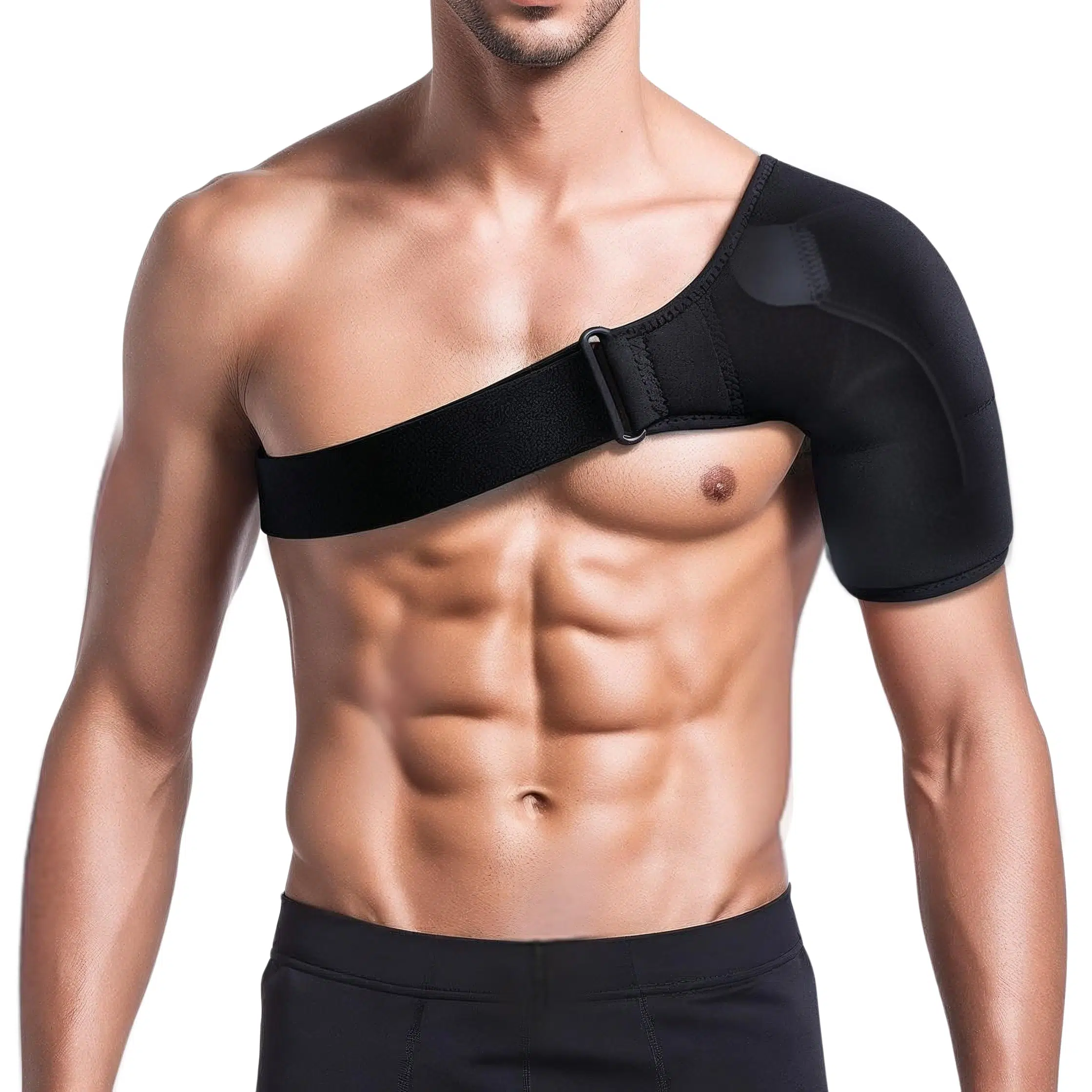
Every NuovaHealth shoulder brace is designed to work with how your shoulder naturally moves, not to hold it rigidly still. It provides gentle compression around the affected shoulder and the same side of your upper back, supporting the muscles, tendons, and surrounding soft tissues while helping you stay aware of how the shoulder is positioned and moving. The brace guides movement away from the most painful extremes without blocking normal motion. The padded panel and strap offer mild resistance as you approach the furthest points of shoulder movement, such as reaching fully overhead or behind your back. It also supports the shoulder‑blade area on the affected side, making it easier to avoid leaning forwards into a slouched posture that can irritate the top and front of the joint.
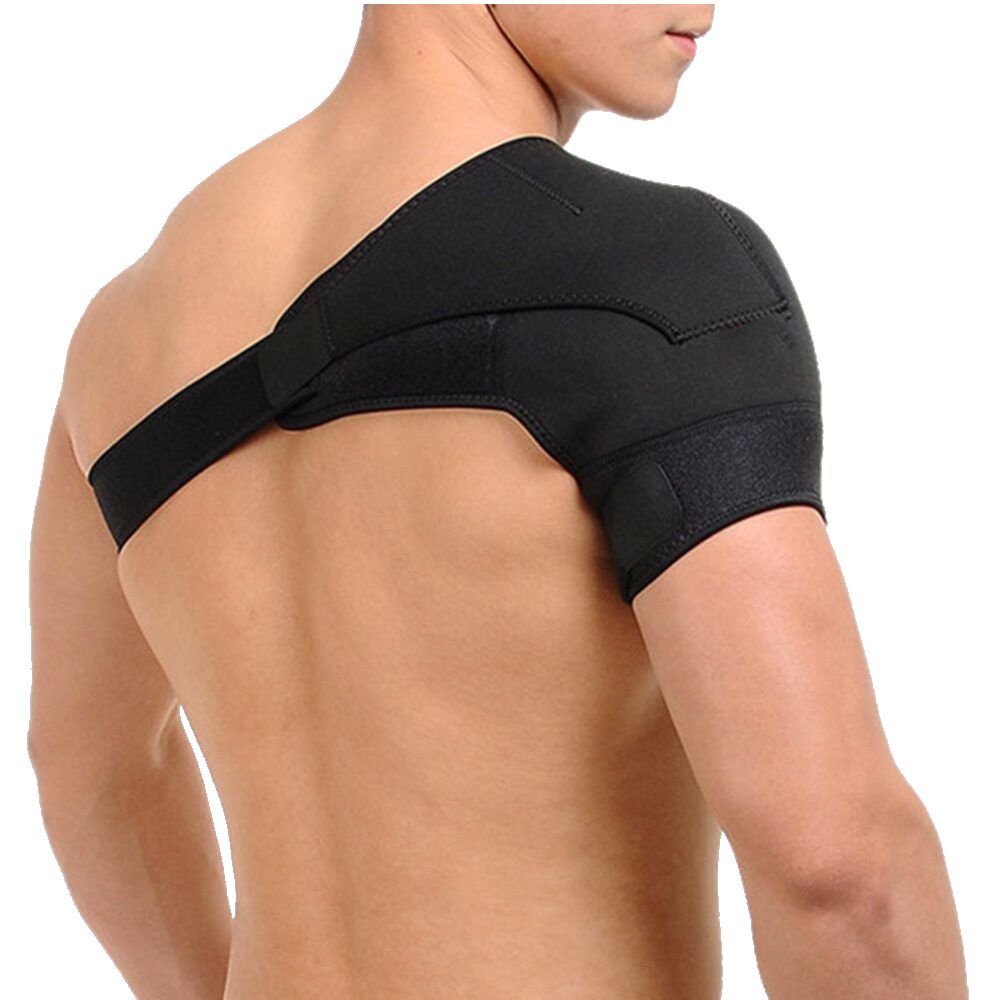
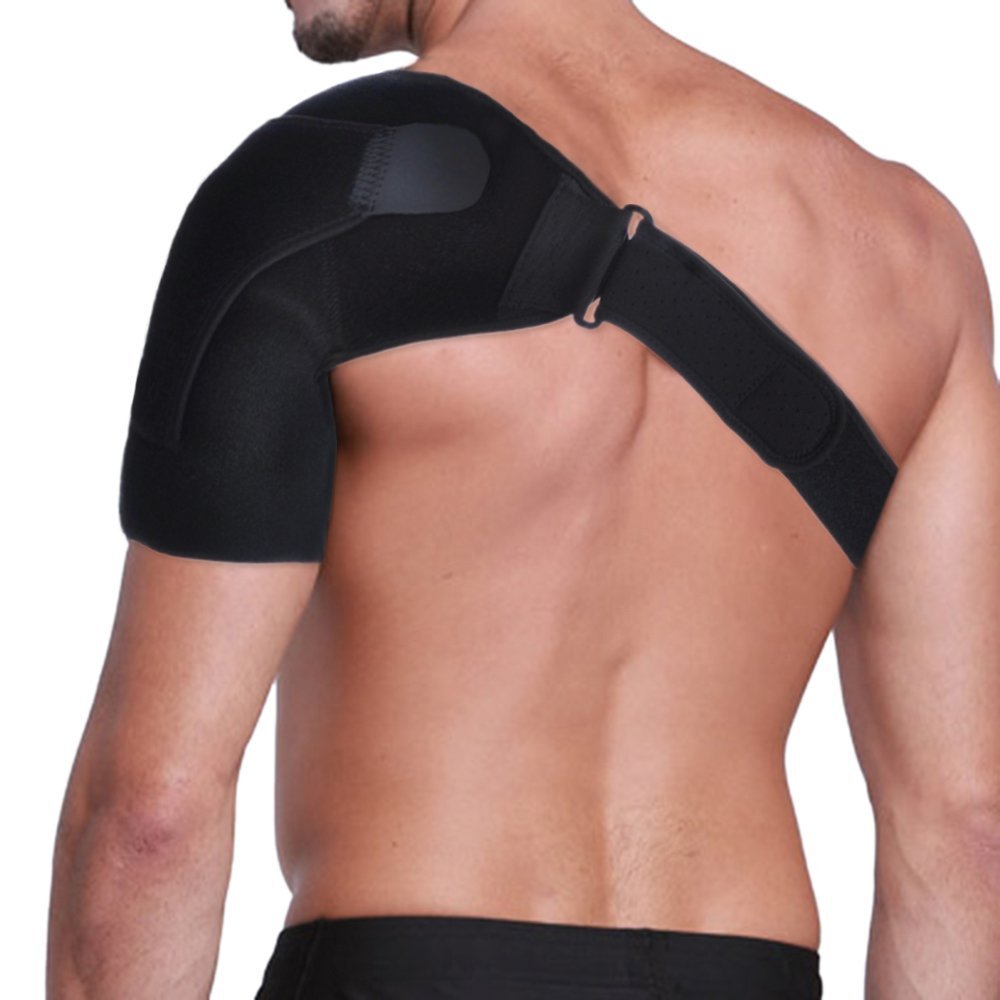
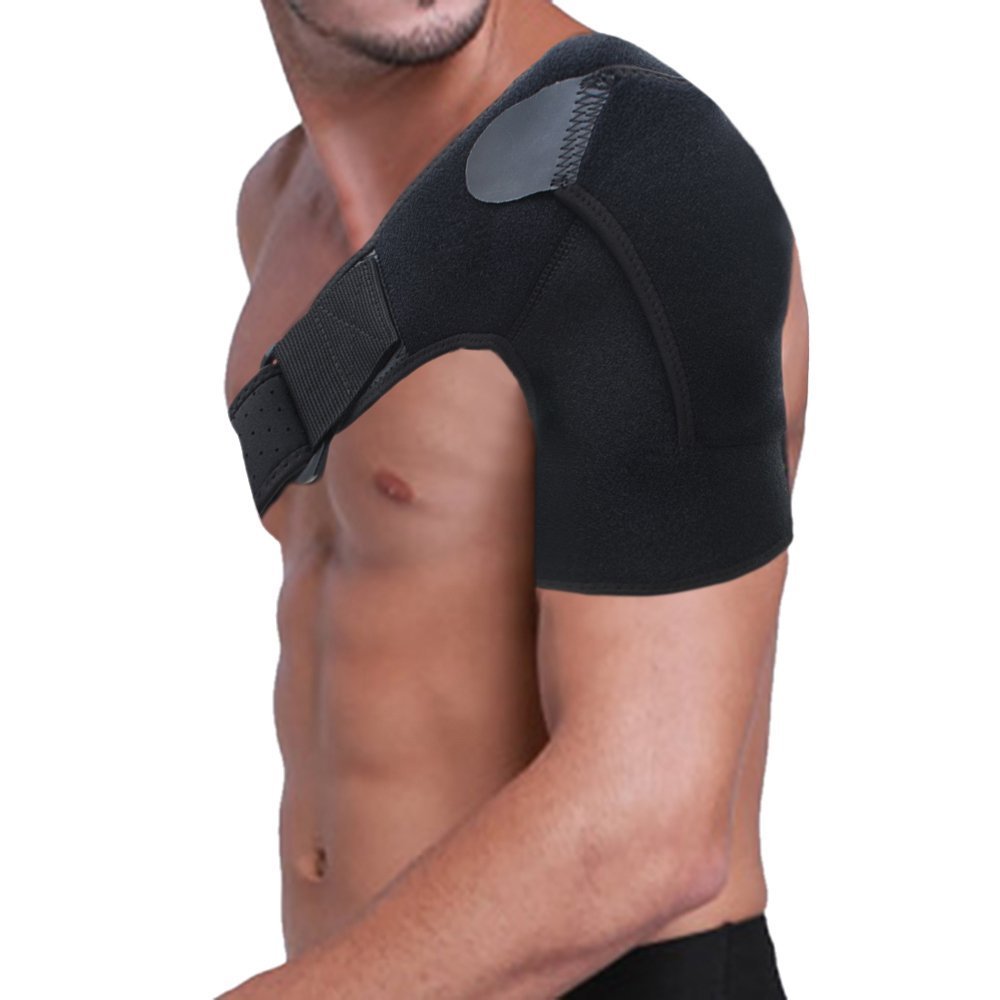
This single‑shoulder support design – a padded panel on the side that needs help, anchored by an adjustable strap across the chest and around the opposite side of the ribcage – follows the same principle clinicians use when they want to support one shoulder without restricting both sides. By improving how the shoulder is positioned and how weight and strain pass through it, every NuovaHealth shoulder brace helps reduce sharp pain during movements that place higher demand on the joint, such as lifting or reaching overhead. It makes longer periods of activity easier to manage while still allowing you to move and exercise the shoulder safely.
Key Features of Every NuovaHealth Shoulder Brace
Adjustable Straps and One‑Size Design
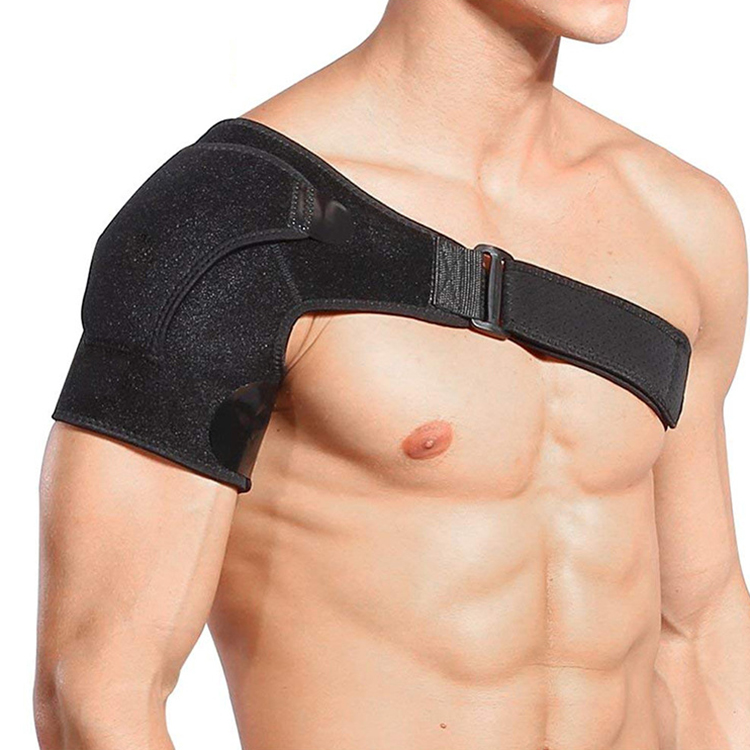
Each NuovaHealth shoulder brace is shaped for either the left or right shoulder and can be adjusted to fit your body. The padded panel sits over the shoulder and upper back on the affected side. A padded strap runs from this panel across your chest, around the opposite side of your ribcage, and back to the front where it fastens with a buckle. By tightening or loosening this strap, you can set how firmly the brace supports your shoulder. Too little support will not change how weight and strain are distributed through the joint, while too much can feel restrictive or uncomfortable. The adjustable design means you can start with lighter support and increase it when you are doing tasks that involve lifting, reaching, or carrying, then ease it off again during periods of rest or lighter activity. This flexibility makes it easier to match the level of support to your activity throughout the day. The same brace fits a wide range of adult body shapes while sitting securely and comfortably on the supported shoulder.
Easy‑to‑Use Front Buckle System
The main buckle sits on the front of your chest. Many people with shoulder pain find it difficult to reach behind their back, especially if lifting or twisting the arm is painful. Because the buckle is at the front, you can put the brace on and adjust it without twisting or lifting the arm into awkward positions. Place the padded panel on the side the brace is designed for, bring the strap across your chest and along the other side of your ribcage, then clip and tighten it where you can see and reach it easily. Being able to adjust the brace from the front makes it simpler to fine‑tune the fit through the day. If any area feels too tight, or you notice tingling or a change in skin colour or sensation in the arm, loosen the strap slightly. The aim is a supportive yet comfortable fit that allows movement while keeping circulation normal.
Targeted Compression for Pain Relief
Every NuovaHealth shoulder brace provides gentle, even compression around the shoulder region. This can reduce the feeling of swelling or fullness around the joint and gives steady contact that many people find soothing. By supporting the muscles, tendons, and surrounding soft tissues, compression can reduce the sense that the shoulder is unsupported, which often eases background aching. The improved awareness of how the shoulder is positioned and moving also makes you less likely to move suddenly into painful or strained positions. The compression supports the soft tissues around the joint without shifting the bones. It should never feel harsh or tight enough to cause discomfort or altered sensation. If it does, ease the straps and, if this does not help, seek advice from a clinician. This steady contact helps the shoulder move more smoothly and confidently during daily activity.
Posture‑Supporting, Movement‑Guiding Shape
The padded panel of every NuovaHealth shoulder brace follows the curve of the shoulder and upper back on one side. When used with the strap that runs across the chest and around the opposite side of the ribcage, the brace helps keep the affected shoulder from falling forwards into a slouched position. This is particularly relevant for problems where forward posture or reduced shoulder‑blade control narrows the space for tendons at the top of the joint or alters how load passes through it, such as rotator cuff irritation or posture‑related pain. By supporting the shoulder and upper back in a slightly more upright position, the brace can reduce pinching at the top and front of the joint. It also provides light resistance as you approach movements that usually cause pain, without stopping you moving altogether. This helps you maintain a stable shoulder position during work, exercise, or daily tasks.
Lightweight, Breathable Materials for Regular Use
Every NuovaHealth shoulder brace is made from lightweight, breathable materials that draw moisture away from the skin and allow air to circulate. This reduces heat or moisture build‑up, which can quickly become uncomfortable under thicker or less breathable supports. The design makes it practical to wear the brace during the times of day when your shoulder usually starts to ache, without feeling weighed down or overheated. This helps you keep the brace on when your shoulder needs support most.
Ergonomic Shape for Natural Movement
The shape of every NuovaHealth shoulder brace sits close to the body without digging into the neck, underarm, or ribs. Once positioned and adjusted, the brace stays in place as you move, and the padded edges reduce rubbing and chafing. You should still be able to use the arm for light daily tasks such as dressing or reaching for objects, rather than feeling that the shoulder is kept still. In most cases, it is better to keep the shoulder moving within a comfortable range of movement rather than hold it completely still. The brace guides and supports movement without stopping it, helping to prevent stiffness while protecting the shoulder from moving beyond a comfortable range.
Comfort and Protection in Everyday Bumps
The padding in every NuovaHealth shoulder brace improves comfort and provides cushioning. In daily use, this softens small knocks – for example brushing against a door frame or moving through a crowded space – and reduces pressure over bony points such as the top of the shoulder that are already sore. It is not a protective shell for major impacts, but it can protect sensitive areas from small jolts that are hard to avoid. Knowing that the shoulder has some cushioning often makes it easier to move more freely and naturally. This cushioning helps you move confidently through everyday spaces.
Hot and Cold Therapy with Integrated Pocket
Every NuovaHealth shoulder brace includes a pocket over the shoulder to hold a hot or cold pack securely in place. If your clinician recommends using heat or cold, a cold pack can help ease sharp pain or swelling after activity, while a warm pack can help relax stiff muscles and ease aching at other times. Because the pack is held in place, you can sit upright and move the shoulder gently while applying cold or heat, rather than having to stay still to balance a pack. The pocket means you do not have to hold the pack yourself or try to keep it in place with one hand. Packs should be wrapped in a thin cloth and used for limited periods, as advised by your clinician, rather than placed directly on bare skin for long spells. This feature makes it easier to combine temperature therapy with gentle movement, as many clinicians recommend.
Discreet Design, Durable and Odour‑Resistant Fabric
Every NuovaHealth shoulder brace is slim and sits neatly under clothing, so it does not feel bulky or show through most tops. This makes it easier to use at work or in social settings without drawing attention. The materials are robust enough to cope with regular use without quickly losing their shape or support. They also resist odours and the build‑up of bacteria, which is helpful if you wear the brace for long periods on days when your shoulder is working harder. Being able to wear the brace discreetly and comfortably under normal clothes makes it more likely that you will use it when support is most needed. This combination of comfort and discretion encourages regular use when your shoulder needs support most.
Clinician‑Informed Design and 30‑Day Trial
Every NuovaHealth shoulder brace follows the same principles physiotherapists commonly use when supporting one shoulder in rehabilitation: firm support on the side that needs it, anchored across the chest and around the opposite side of the ribcage, while still allowing useful movement. Each brace is made for either the left or right shoulder, so the shaping of the panel and strap follows that side of the body closely rather than being a generic, reversible sleeve. The built‑in hot/cold pack pocket and front buckle make it practical to use this support throughout daily life, not just in short treatment sessions. A 30‑day money‑back guarantee gives you time to see whether this type of support makes a difference for your shoulder in everyday use. It will not fix the underlying problem in that time, but it provides a useful period to see whether your shoulder feels better supported and easier to manage with this design. Every NuovaHealth shoulder brace reflects the same clinical reasoning used in rehabilitation settings, adapted for everyday comfort and independence.
How to Put On and Wear the Brace
To get the most from your NuovaHealth shoulder brace, it needs to be fitted correctly. Each brace is designed for one shoulder at a time. You choose a left‑shoulder or right‑shoulder version, and the steps to put it on are the same on that side. It may feel slightly awkward the first time you put any brace on, but that is normal and most people find a routine that works for them after a few tries.
In general:
- Place the padded panel over the shoulder and upper back on the side you are supporting, so it sits comfortably over the top of the shoulder and shoulder‑blade area.
- Bring the padded strap across the front of your chest and around the opposite side of your ribcage.
- Fasten the buckle on your chest and gently tighten the strap until the brace feels secure.
- Make sure the strap on the opposite side of your ribcage lies flat and is not twisted or digging in. You may need to adjust its position slightly for comfort.
- Check that you can still move your arm through a comfortable range for light tasks, such as reaching forwards to a table or lifting a light item, without feeling completely blocked.
Once you have adjusted it a few times, most people find the process simple and straightforward. At first, it is sensible to wear the brace for shorter periods, such as an hour or two, and see how your shoulder feels. You can then start using it during tasks that tend to trigger pain, and take it off during periods of rest or lighter activity so the shoulder is not held in one position for long periods.
If you notice tingling, numbness, or unusual coldness, numbness, or colour change in the arm or hand while wearing the brace, loosen it or take it off. If that does not settle quickly, it is important to seek advice from a clinician.
If you are already under the care of a GP, physiotherapist, or another clinician, follow any specific instructions they give about how and when to use the brace, particularly after surgery or a major injury.
Every NuovaHealth shoulder brace is designed for adult use and should always be fitted and worn as advised by your clinician.
What to Expect and When to Seek Extra Help
When you first start using your NuovaHealth shoulder brace, you may notice that the shoulder feels more supported and less vulnerable. Movements that used to be sharp or uncomfortable may start to feel easier. That’s often one of the first changes people notice. You may also feel more confident using the arm within a comfortable range.
Over the next few weeks, when you combine brace use with appropriate exercises and simple adjustments to how you move or position the shoulder during everyday movements such as reaching or lifting, many people notice that:
- tasks that were previously difficult can be managed with less discomfort,
- pain after activity tends to ease more quickly,
- and the shoulder feels less stiff and moves more freely within its comfortable limits.
The brace will not alter what a scan shows, but it can change how the shoulder feels and functions day to day. It’s common for a shoulder that feels fine early in the day to ache later after repeated use. That pattern is typical when the shoulder muscles tire. The aim is to make that later‑day discomfort more manageable.
This variation is normal — shoulders recover at different rates depending on the cause and duration of the problem. A brace cannot cure deeper joint or tendon problems, but it supports recovery by reducing strain while you rebuild strength. For many people, it makes everyday movement and rehabilitation easier to manage.
Stop using your NuovaHealth shoulder brace and seek advice if you notice:
- new or worsening sharp pain that differs clearly from your usual symptoms,
- persistent swelling, redness, or warmth around the shoulder,
- numbness, tingling, or unusual coldness in the arm or hand that does not ease quickly when you loosen or remove the brace,
- or sudden loss of strength or control in the affected arm.
Seek urgent medical attention immediately if:
- you have a new injury with severe pain and cannot move the shoulder at all,
- you notice a sudden change in the shape of your shoulder or collarbone,
- or there is significant new weakness, or your hand becomes noticeably paler or colder than the other side.
If you have been using your NuovaHealth shoulder brace regularly for several weeks, alongside an appropriate exercise plan, and your symptoms are not improving or are gradually getting worse, it’s important to review your progress with a GP or physiotherapist. A clear plan — whether that includes exercises alone, exercises with the brace, or other treatments — usually makes shoulder pain easier to manage.
Bringing It All Together: Support and Next Steps
Many shoulder problems develop when certain movements or positions place strain on the shoulder structures. Changing how the shoulder is supported and how load passes through it can make those movements more comfortable as you work on longer‑term recovery.
Every NuovaHealth shoulder brace is built to support one shoulder with a shaped panel that supports the shoulder and upper back. It guides the shoulder away from painful extremes using an adjustable strap that runs across the chest and around the opposite side of the ribcage, helping you maintain a stable, comfortable shoulder position. Features such as the integrated hot/cold pack pocket, breathable fabrics, front buckle, and discreet profile are designed to make it practical to use your NuovaHealth shoulder brace during everyday activities or rehabilitation exercises, not just in short treatment sessions.
If this description matches what you experience each day, and serious causes have already been assessed and treated, every NuovaHealth shoulder brace offers reliable support if your shoulder needs extra help during recovery. The 30‑day money‑back guarantee gives you time to see how it affects your comfort and confidence when using your shoulder. If you are unsure whether it is suitable for your condition or stage of recovery, discuss it with a GP or physiotherapist to decide together how best to use it. It’s designed to complement your rehabilitation, not replace it.
When used as advised, your NuovaHealth shoulder brace supports recovery through a combination of comfort, stability, and clinically informed design. It helps you stay active within safe limits and reflects the same principles trusted by clinicians and recommended to their patients.
Important Information and Guidance
The information on this page provides general guidance and does not replace personal medical advice, diagnosis, or treatment. Shoulder problems vary widely, and no brace can guarantee specific results or replace other forms of care. If you have new, severe, or persistent symptoms, or if you are unsure whether this product is appropriate for you, please speak to a GP, physiotherapist, or another suitably qualified healthcare professional. If you are pregnant or have health conditions that may affect how you use supports or compression, seek individual clinical advice before using your NuovaHealth shoulder brace.



by Lakhwinder attri
Good